By
By 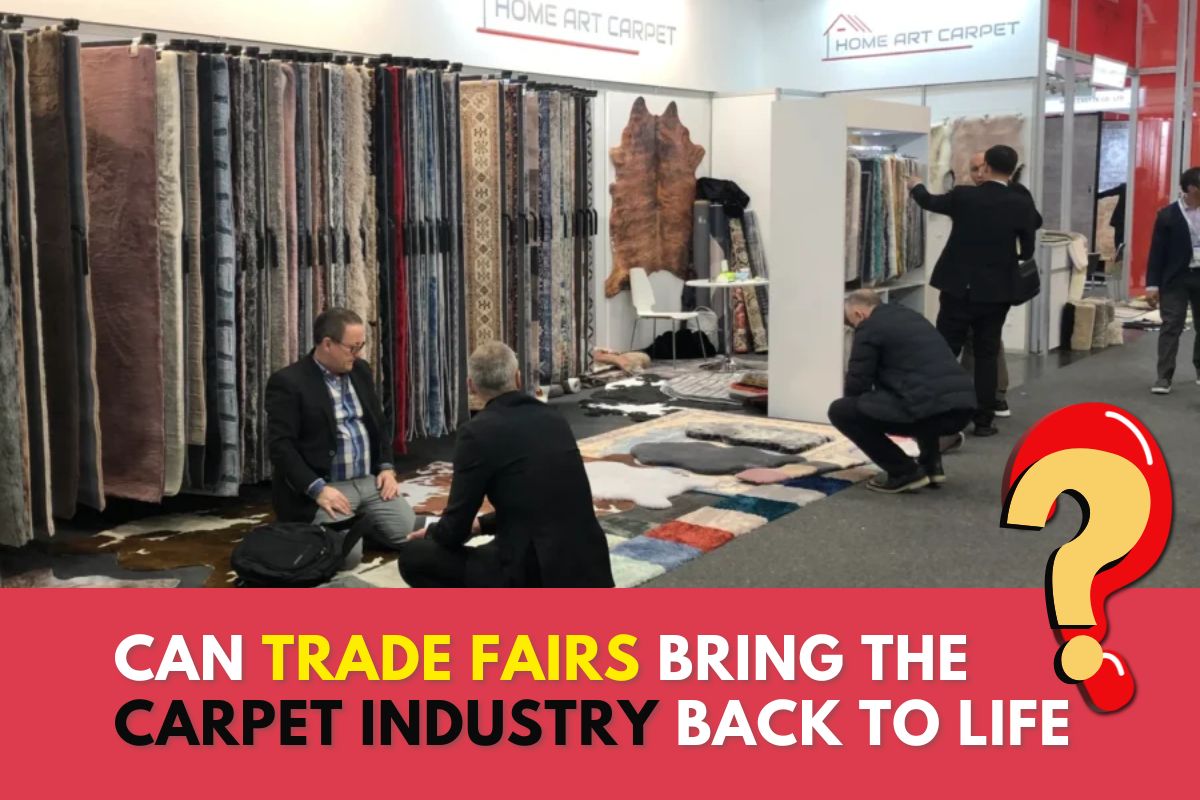
The carpet industry in the world, particularly the handcrafted segment has been in difficult terrain. The rising cost of production, the decreasing exports, geopolitical tensions in trade and shifting preferences of consumers have left a lot of manufacturers and craftsmen struggling to survive. With this in mind an important question arises: can global trade fairs revive the struggling carpet industry?
The short answer is Yes, but only when they’re employed in a strategic way. Long answer? Let’s break it down.
The Carpet Industry’s Current Reality Check
The carpet industry, especially the ones in India, Iran, Nepal and Turkey is heavily dependent on exports. For decades, consumers from US, Europe, and the Middle East fueled growth. However, the last few times have seen a variety of issues:
- Demand is slow in key markets.
- Global buyers are sensitive to price
- Artificial and synthetic carpets
- Trade barriers and uncertainty over tariffs
- Reduced visibility of exporters for small or mid-sized
For millions of craftsmen as well as MSME exporters, their survival is dependent on the global market and fresh market sources – and this is the point where international trade fairs come into the equation.
Read More: Career in Carpet Technology – Know Eligibility, Courses & Colleges
Reason Global Trade Fairs Still Matter in 2026
Despite the increasing use of digital sources, physical trade fairs remain indispensable in the carpet industry. Carpets are tactile and design-driven products that buyers would like to be able to feel, see and feel prior to placing large orders.
Global carpet fairs function as:
- Platforms for matching buyers and sellers
- Hubs with trend forecasting capabilities
- Trust-building areas
- Launchpads for the latest collections
In a world driven by storytelling and craftsmanship, contact with people in person still seals the deal.
Major Global Trade Fairs Driving Carpet Revival
The most renowned trade fairs for textiles and carpets comprise:
- Domotex (Germany) – The benchmark worldwide for flooring and carpets
- Surfaces (USA) – Key access point to the American market
- Maison&Objet (France) – Suitable for designer and premium rug
- Heimtextil (Germany) – Strong European buyer presence
- India Carpet Expo (India) – Gateway for buyers from the world to Indian producers
They don’t just create orders, they influence the industry’s new direction for the future.
Read More: Flooring and Carpets Market Outlook from 2025 to 2035
How Trade Fairs Can Revive the Carpet Industry
1. Straight Access to Buyers from all over the world (Without middlemen)
Trade fairs are a great way for exporters to:
- Meet wholesalers, retailers, as well as designers directly
- Reduce dependence on agents
- Make an effort to negotiate better margins
Small exporters with a good buyer relationship can keep operations going throughout the year.
2. Rebuilding Trust After Market Uncertainty
In the midst that are characterized by trade wars, tariffs and supply chain disruptions buyers are looking for trustworthy suppliers.
Face-to-face meetings at fairs can help:
- Assist buyers in reassuring them about the delivery timeframes
- Prove the consistency of quality
- Develop lasting relationships
It’s harder to establish trust online, but is much easier to establish at an exhibit booth.
3. Fashion Alignment & Product Evolution
Global fairs are the place where new trends begin to emerge:
- Earthy tones
- Sustainable materials
- Flatweaves and simple designs
- Rugs with Eco-certification and traceability
Exporters who monitor these trends are able to alter their production and eliminate inventory that is outdated.
4. Spotlight on Handmade and Sustainable Carpets
Carpets made by machines flood the market and trade fairs offer hand-made rugs the attention they deserve.
Storytelling around:
- Artisan livelihoods
- Natural dyes
- Sources of ethical sources
This has a strong resonance European and high-end US buyers, particularly in the post-fast fashion period.
5. Increases Artisan Morale & Employment
The increased export orders are
- More weaving assignments
- A steady income for artisans
- Preservation of traditional techniques
For weaving clusters that are produced in India, Nepal, and Iran Trade fairs indirectly help support the entire rural economy.
Are Trade Fairs Sufficient on their Own?
Not entirely.
Trade fairs are powerful catalysts but their success depends on how exporters use them.
To really benefit exhibitors, they must
- Show curated, relevant and trendy collections
- The price of products should be realistically
- Make sure you follow up with vigor post-fair
- Make sure you invest in storytelling and branding
- Combine fairs that are physically held with digital outreach
A poorly-planned booth won’t make anything new, but a thoughtfully planned presence can transform.
The Role of Government & Industry Bodies
Trade fairs are most effective when they are supported by
- Export subsidies
- Cost assistance for booths
- Travel incentives
- Branding initiatives such as “Handmade by India”
When export councils and government agencies actively encourage the participation of small players, even small players are able to gain international recognition.
Read More: Career Opportunities in the Global Carpet & Textile Industry
The Digital + Physical Fair Model: The Future
Exporters who have had the most success make use of an mix of strategies:
- Leads can be generated at trade fairs.
- They can be nurtured and converted via digital channels
- Utilize social media and catalogs to remain visible throughout the year.
This mix assures that trade fairs won’t stay one-time events but transform into sustainable growth engine.
Final Conclusion: Can Trade Fairs revitalize the Carpet Industry?
Yes, trade fairs around the world can revitalize the carpet industry that is struggling However, they are not magic wands.
They perform their duties in the following situations:
- Exporters are innovating
- Artists are supported
- Buyers recognize value above price
- Governments enable participation
In an age of online connections, international trade fairs remain to offer an unbeatable experience: human connection, confidence, and tangible experience. For an industry with a rich tradition, this human touch could be the most powerful revival tool yet.
FAQs: Global Trade Fairs & the Carpet Industry
Q1. Are global trade fairs still relevant for carpet exporters?
Carpets are a tactile product and buyers are more likely to purchase them in person for evaluation prior to purchasing large quantities.
Q2. Which trade fair is the best for hand-made carpets?
Domotex and India Carpet Expo are one of the most influential for knotted and hand-made carpets.
Q3. Can small exporters afford international trade fairs?
Thanks to subsidies from the government or shared booths SMEs can take part in the fairs effectively.
Q4. Do trade fairs actually create order?
Yes numerous exporters claim 30 to 60 % of their annual orders coming through fair-related leads.
Q5. Are trade fairs more effective than online marketplaces?
They function best together. Trade fairs strengthen trust. digital platforms help to maintain relations.
Q6. How often should exporters attend trade fairs?
It is recommended to attend 1-2 major international fairs per year and accompanied by regional fairs.