By
By CarpeTell Fiber ID Device: The carpet industry in the world has faced for a long time a difficult issue: how to detect the composition of fibers in finished carpets without causing harm to the product. With increased scrutiny from regulators, buyers, as well as sustainability audits, the demand for speedy, reliable and non-destructive fiber identification has never been greater.
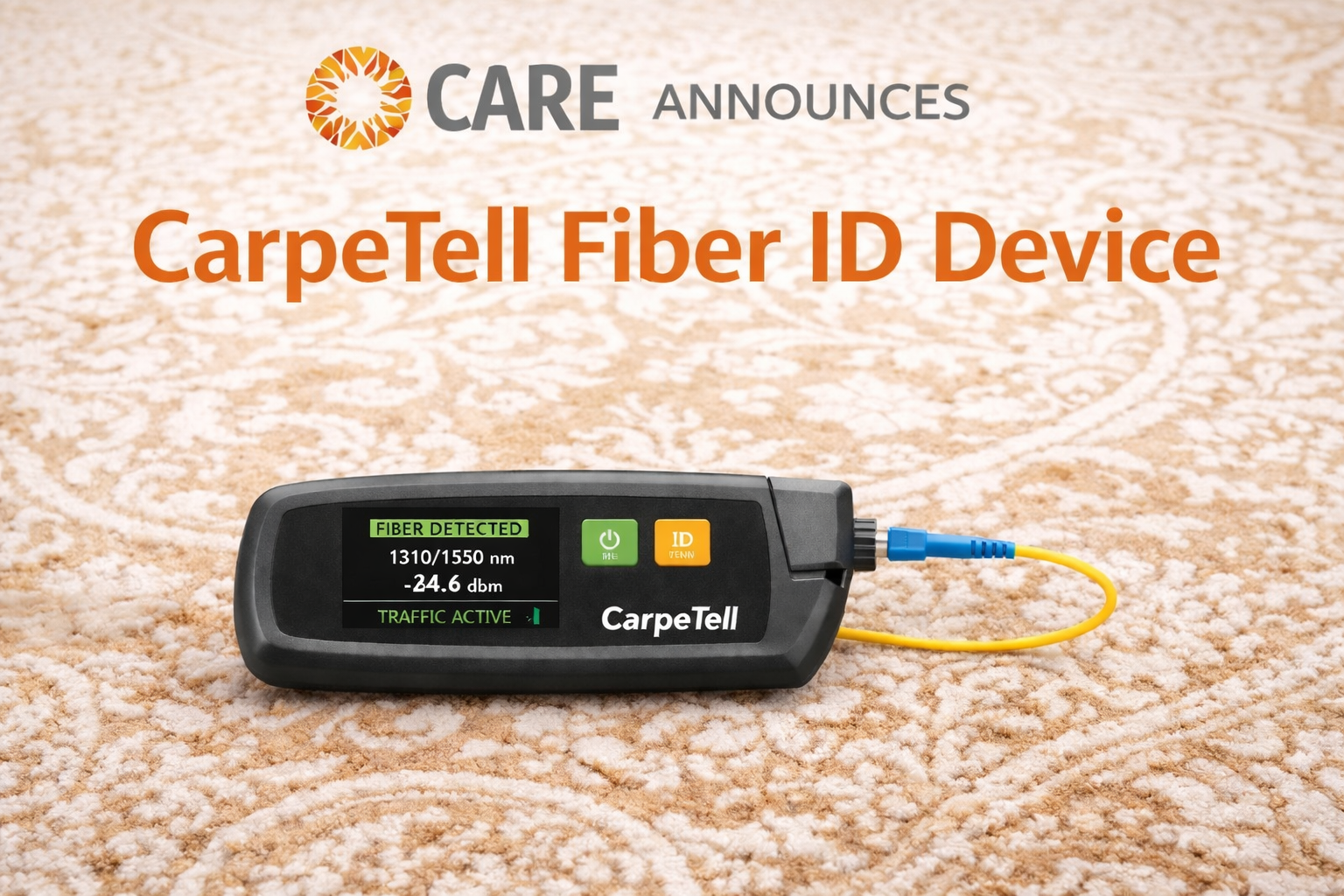
As a significant step towards solving this problem, CARE has officially announced the introduction of CarpeTell, a brand new technology for fiber-based recognition (Fiber ID) device designed specifically for carpets and the textile industry. The device promises to bring scientific precision, transparency and trust to fiber verification-something the industry has struggled to standardize for decades.
CarpeTell is being promoted not as a purely test instrument, but also as a solution for credibility and compliance for exporters, manufacturers buyers, inspection companies and sustainability certifiers across the globe.
Why Fiber Identification Matters More Than Ever
The composition of fibers plays a crucial aspect in determining the quality of carpets:
- Price and value
- Performance and durability
- Environmental footprint
- Conformity to specifications of the buyer
- Eligibility for sustainability labels as well as trade certifications
However to date testing fiber content, particularly in blended carpets has relied heavily on laboratory based tests, manual testing, chemical analysis or subjective assessment. All of these are:
- Time-consuming
- Costly
- Samples are destroyed by the chemical
- It is difficult to scale up for large-scale inspections
Global trade regulations are tightening particularly within Europe and North America, exporters are being pressured to show what their carpets actually composed of and not simply claim it on paper.
Read More: Global Carpet and Rugs Market Forecast to Reach USD 61.77 Billion by 2031
CarpeTell Fiber ID Device Key Details
| Feature | Details |
| Device Name | CarpeTell |
| Announced By | CARE |
| Industry | Carpets & Textiles |
| Purpose | Non-destructive fiber identification |
| Testing Method | Analyzing data and optics |
| Portability | Handhelds and field-useable |
| Target Users | Exporters, manufacturers Buyers, manufacturers, labs |
| Key Benefit | Instant, non-damage-free confirmation |
| Use Case | Quality control, compliance Transparency in trade |
| Official Website | https://carpetrecovery.org/ |
What Is CarpeTell?
CarpeTell is a handheld fiber identification device that was designed to quickly analyze and recognize carpet fibers, without cutting, burning or harming the product. According to CARE CarpeTell, this device makes use of advanced analysis based on data and optical technology to determine the fiber’s composition with high accuracy.
In contrast to traditional laboratory tests, CarpeTell is designed for on-site usage, which allows inspections directly on the floor of factories ports, warehouses trade fairs, buyer facilities.
This new technology marks a transition from post-shipment tests to real-time verification, which reduces delays and disputes that occur in carpet trade around the world.
Read More: North America Luxury Carpet Market Analysis 2026
How CarpeTell Works
CarpeTell utilizes advanced fiber recognition technology that analyzes the way fibers react to light and different physical signals. Each fiber, be it silk, wool or cotton, jute, polyester, nylon or mixed variants-has distinct characteristics.
The device:
- It is placed directly on the carpet’s surface
- Scans the structure of fibers but without eliminating material
- The scan is compared against an uncalibrated database
- Instantly displays results of fiber identification
This removes the need of:
- Cuts from a sample
- Chemical Reagents
- Lab dispatch
- Long waiting times
For exporters with strict time frames for shipment This is an important operational benefit.
CarpeTell Addressing a Long-Standing Industry Pain Point
The misrepresentation of fiber content, whether intentional or not, is a frequent issue in the global carpet trade. The most frequent causes of disputes are:
- Wool carpets have synthetic blends
- Silk can be substituted for the viscose, or art silk
- Recycled fibers are not properly represented
- Specifications of the buyer do not correspond to the actual shipping conditions
Such disputes can result in:
- Rejected consignments
- Payment delays
- Legal disputes
- Blacklisting by buyers
- The loss of brand trust
CarpeTell provides a neutral, scientific verification layer that helps to settle fiber-related disputes before they become a problem.
Read More: Flooring and Carpets Market Outlook from 2025 to 2035
CarpeTell Implications for Indian Carpet Exports
India is among the largest carpet exporters in the world providing hand-knotted flat weave and machine made carpets for global markets. But, Indian exporters frequently face inspections for compliance with fibers from foreign buyers and inspection agencies.
The launch of CarpeTell could result in:
- Improve India’s image of Transparency
- Reduce rejections at export
- Increase confidence of buyers
- Help sustain ethical and sustainable source claims
- Small exporters can be helped meet international standards
Exporters looking to export to markets with strict labeling regulations for example EU and the US, the device could turn into a trade facilitator rather than merely a test instrument.
CarpeTell Sustainability and Compliance Advantages
Sustainability claims are subject to intense scrutiny. Consumers are increasingly seeking proof that carpets are labeled as:
- Natural fiber
- Recycled material
- Eco-friendly
- Low-impact
actually do meet the claims.
CarpeTell assists in sustainability efforts through:
- Verification of recycled vs virgin fibers
- Validation of the natural fiber content
- Audits on-site for eco-labels
- A reduced dependence on chemical testing
This is in line with global trends in sustainable compliance and traceability.
CarpeTell Use Cases Across the Carpet Value Chain
Manufacturers
- Control of quality during production
- Verification of raw materials that are incoming
- Internal audits are conducted prior to the shipping
Exporters
- Inspections prior to shipment
- Building confidence in buyers
- Speedier clearance of ports
Buyers & Importers
- On-receipt confirmation
- Risk of mislabeling reduced
- Stronger supplier accountability
Testing & Inspection Agencies
- Field testing with no sample destruction
- More rapid reporting
- Cost reduction
Trade Fairs & Exhibitions
- Instant verification during buyer negotiations
- At the time of purchase, transparency
Why Non-Destructive Testing Is a Big Deal
Traditional fiber testing usually involves cutting a small portion of the carpet. This is something that the most discerning buyers and artisans oppose. Carpets with high value, particularly hand-made ones, are less valuable when they are damaged.
CarpeTell’s non-destructive strategy assures:
- No product damage
- No resale value loss
- There is no conflict between buyers and sellers
- Ethical testing of handmade products
This alone makes it a great choice for both the premium and traditional carpet segments.
Potential Industry-Wide Impact
If the technology is widely used, CarpeTell could:
- Set new verification benchmarks
- Encourage honest fiber declarations
- Eliminate unfair competition due to labeling
- Be sure to support fair pricing for authentic materials
- Inspire the industry to adopt transparency that is backed by data
In time, the identification of fibers could become a standard procedure, similar to quality certifications in the present.
Challenges and Adoption Considerations
While the announcement was well-received, certain industry players will be paying close attention to:
- Accuracy validation for complex blends
- Calibration standards
- Cost of device use
- The requirements for training
- Global regulators have accepted the acceptance of buyers
CARE has said that additional demonstrations of technology and collaboration with industry are expected to follow, indicating the use of a gradual approach to adoption.
What Comes Next?
CARE’s announcement signals the beginning of a technology-driven shift in how carpets are authenticated and traded. As demonstrations, pilot programs and certifications become available, CarpeTell may soon become an industry reference tool that is trusted by the trade.
If approved by inspection bodies and accepted by the major buyers, The device can drastically lower frictions in the carpet trade, thereby benefiting both importers and exporters.
This announcement by CarpeTell by CARE is more than just the launch of a brand new device. It also signals an overall change in the carpet industry towards transparency as well as accountability and confidence.
With its instant non-destructive identification of fibers, CarpeTell addresses one of the biggest challenges in the trade industry. The impact of CarpeTell could go far beyond compliance, altering customer relationships as well as sustainability verification and the confidence of trade around the world.
Since the authenticity of fibers is becoming a key element for pricing, ethics sustainable development, the use of tools such as CarpeTell could soon become indispensable instead of optional.
FAQs : CARE Announces CarpeTell Fiber ID Device
Q1. What is the CarpeTell fiber identification device?
CarpeTell is an un-destructive device for identifying fibers made public by CARE created to quickly determine the carpet’s fiber composition without causing damage to the carpet.
Q2. Who can use CarpeTell?
Exporters, manufacturers, buyers inspectors, buyers and sustainability auditors can make use of CarpeTell for verification of fiber on the spot.
Q3. What makes CarpeTell crucial for the carpet trade in the world?
It increases transparency, decreases disputes, helps with sustainability claims, and facilitates faster and more reliable verification of fiber in trade transactions.