By
By 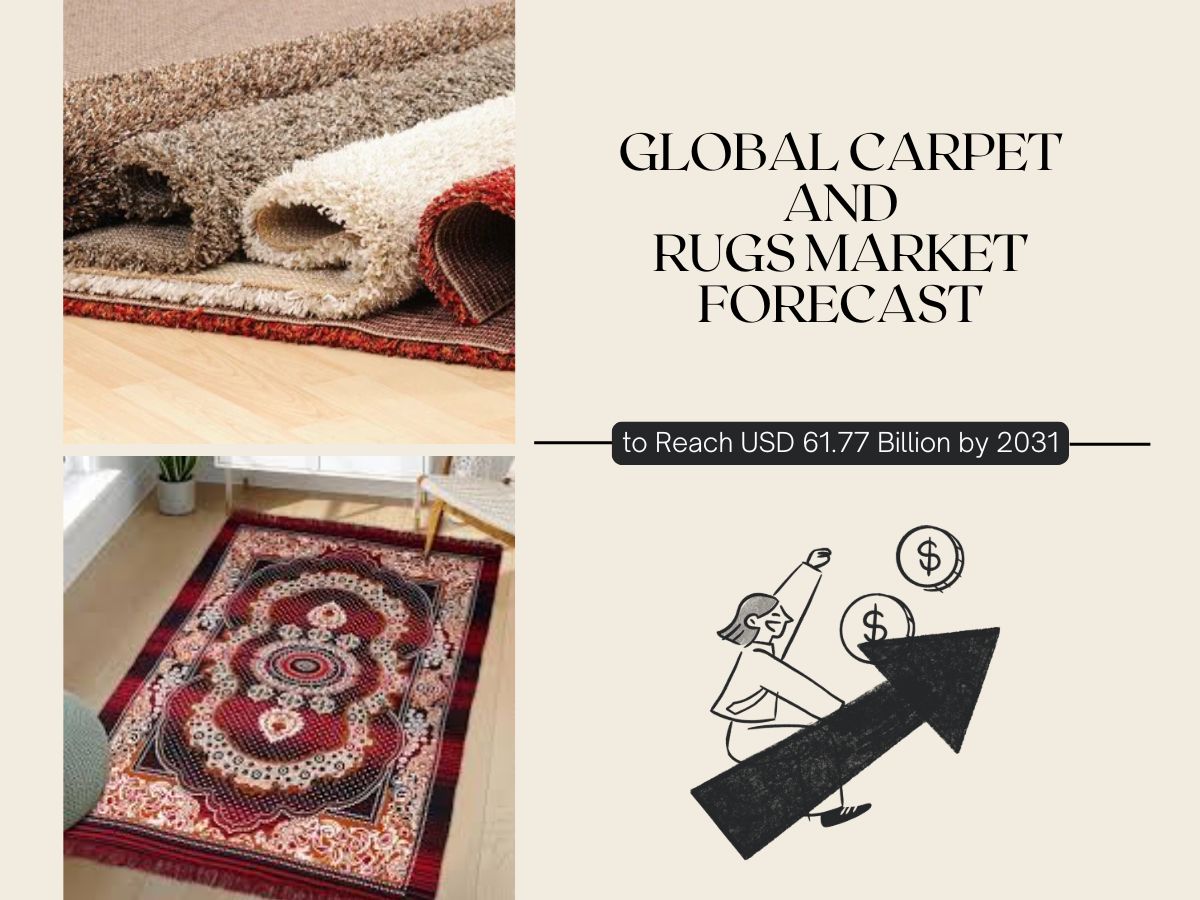
The global carpet and rugs market has been growing at a steady pace and is predicted to increase up to US$ 61.77 billion by 2031 which is an increase from USD 46.81 billion in 2025. The market is growing at a CAGR rate of 4.73% between 2026 and 2031. Despite the growing competition with tough flooring like high-end vinyl tiles (LVT) or stone-plastic composite (SPC) carpets and rugs continue to enjoy a high demand in the residential, commercial and hospitality sectors.
The increase is due to the growing investment in home decor, urbanization of cities, the expansion of e-commerce, as well as the growing demand for environmentally friendly and premium flooring choices around the globe.
Global Carpet and Rugs Market Overview
Carpets and rug play an crucial role in interior design as well as aesthetics, comfort and insulation, as well as the effectiveness of heating. From luxurious homes and hotels to offices and retail stores There is a huge demand due to their versatility as well as aesthetic appeal.
Key market highlights:
- Market value (2025) Dollars 46.81 billion
- Estimated value (2031): USD 61.77 billion
- Forecast CAGR (2026-2031): 4.73%
- Fastest-growing region: Asia-Pacific
- Dominant segment: Tufted carpets
Read More: Career Opportunities in the Global Carpet and Textile Industry
Key Drivers Fueling Global Carpet and Rugs Market Growth
1. Rising Demand for Home Decor and Interior Design
Modern consumers are increasingly considering the homes they live in as a living space. There is a rising demand for vibrant shades and designer rugs with digital prints and custom carpets particularly in urban dwellings. The residential market is forecast to grow by 5.87 % because of improvement trends in renovation and aesthetics .
2. Expansion of E-Commerce and Omnichannel Retail
Online retailers have significantly improved transparency of pricing for products access to prices, and the ability to tailor how you shop. Many brands are adopting Direct-to Consumer (DTC) strategies, which provide faster delivery times as well as more options for merchandise and more personalized shopping experience.
3. Commercial Refurbishment and Hospitality Growth
The renovation of commercial buildings, hotels and retail space is continuing to boost carpet demand particularly in areas in which sound comfort along with warmth and adaptability are essential.
4. Sustainability and Eco-Friendly Product Demand
Sustainability is now a key buying factor. Manufacturers are moving toward:
- Fibers from PET that have been recycled
- Bio-based yarns
- Low-emission production processes
- Circular economies and initiatives for recycling
Companies that focus on carbon neutral flooring and eco-friendly materials are getting more popular with environmentally conscious buyers .
Read More: Future of Carpet and Textile Industry in India
Market Challenges and Competition
Hard-Surface Flooring Competition
The luxury vinyl tile (LVT) as well as SPC flooring are getting more popular because of their long-lasting durability as well as their water resistance and low maintenance particularly in educational and retail settings. The trend is now limiting carpet use to applications that focus on comfort, warmth as well as noise-reducing .
Volatile Raw Material Costs
The fluctuation in the petroleum-based inputs can affect synthetic fiber prices. To reduce margins, a lot of producers are vertically integrating in-house yarn production and improving the efficiency of their supply chain.
Segment Analysis: Tufted Carpets Lead the Market
The tufted carpet segment is the most popular segment in the market with 67.62 % of the total market share by 2025.
Why Tufted Carpets Dominate:
- Production that is more efficient and faster
- Modern machinery that allows for sophisticated designs
- A wide price range caters to both premium and budget buyers
Other segments:
Woven carpets are renowned for their the durability of their carpets and are used in luxurious and other hospitality environments
Hand-knotted rugs increasing at 5.28 % CAGR driven by the growing demand for artisan craftsmanship and top design
Read More: History of Kashmiri Hand-Knotted Carpets
Technological Innovations Transforming the Industry
Carpet and rug producers are increasingly adopting new technologies like:
- Printing digitally for high-definition prints
- Solutions-dyed nylon to minimize the environmental impact
- Automation and smart manufacturing to improve effectiveness
- Production on-demand to cut down on the costs of inventory
These advancements allow companies to provide custom designs, speedier turnaround times and long-lasting products and improve their competitive position.
Regional Market Insights
North America: Market Leader
North America held a 31.55 % market share by 2025 and was supported by:
- High per-capita consumption
- A strong home renovation culture
- Replacement demand in residential flooring
Asia-Pacific: Fastest Growing Region
Asia-Pacific is predicted to grow at an 7.06 % CAGR until 2031 and is caused by:
- Rapid urbanization
- Growing disposable incomes in China as well as India
- Expanding middle-class housing demand
- The popularity of top décor products
Europe: Sustainability-Driven Growth
Europe has the benefit of strict green design regulations which push manufacturers towards sustainable production methods, low carbon materials, and energy efficient processes.
Emerging Regions: Middle East & South America
Luxury hotels, tourism infrastructure along with commercial projects in Middle East and South America create exciting growth possibilities.
Key Players in the Global Carpet and Rugs Market
The major companies that shape the sector include:
- Mohawk Industries
- Shaw Industries Group
- Interface, Inc.
- Beaulieu International Group
- Oriental Weavers Carpet Co.
- Victoria PLC
- Tai Ping Carpets International Ltd.
They are focused on the development of new products and eco-friendly manufacturing processes, multichannel retailing and high-end brand positioning to remain in the game.
Future Outlook: What Lies Ahead?
The global carpet and rugs market is predicted to grow by:
- The acceptance of recyclable and environmentally friendly materials
- Development in luxurious and custom rugs
- Expanding of online retail channels
- The demand for housing is increasing in the hospitality and urban housing projects
- Innovative ideas in circular and low-carbon manufacturing.
Regulations that promote Extended Producer Responsibility (EPR) and sustainable product life-cycles will determine the direction of the industry and push brands towards greener and more sustainable production processes .
Conclusion
The global carpet and rugs market forecast to reach USD 61.77 billion by 2031 illustrates a resilient and growing market driven by fashion trends as well as urban expansion, sustainability and the transformation of retail through digital technology. While the competition from hard flooring is still present in the market, carpets and rugs continue to be a major factor in spaces that are aesthetic and comfortable.
With the growing demand in Asia-Pacific and the rise of technological innovation and sustainable development of products The market is set to experience steady growth over the long term and expansion of the premium segment.